Carnation January Birth Flower Alphabet: Design Details
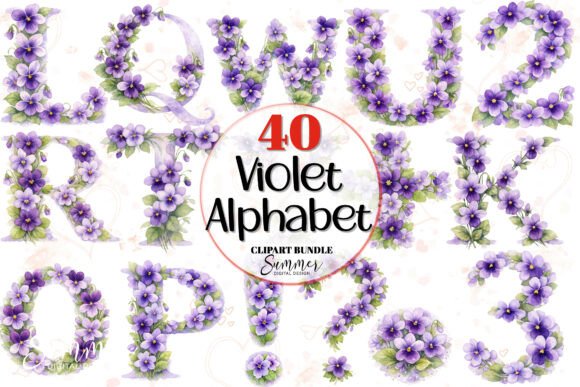
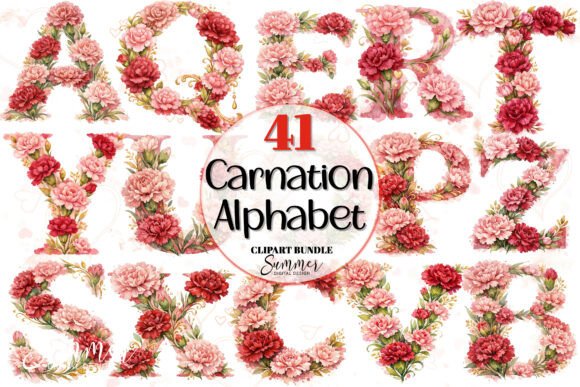
When developing a visual identity, specifically for projects centered around anniversaries or family milestones, typography often serves as the silent narrator. The Carnation January Birth Flower Alphabet collection steps away from the rigid structure of standard vector typefaces to offer something more organic and emotive. This set functions less like a traditional font file and more like a comprehensive design asset library. It consists of 41 high-resolution PNG files—covering A-Z and 0-9—where every letter and number is individually illustrated with watercolor carnation florals.
The visual appeal of this collection lies in its softness and botanical accuracy. Unlike generic clip art overlays, these graphics mimic the ruffled, clove-like texture of actual carnation petals using a translucent watercolor style. The edges are not hard or pixelated; they bleed gently, creating a hand-painted aesthetic that feels artisanal. For a graphic designer or brand strategist, this visual characteristic is vital. It immediately communicates a tone of gentleness, celebration, and organic warmth, making it an ideal solution for branding elements that require a human touch rather than corporate sterility.
Strategic Applications in Branding and Stationery
Understanding where to deploy the Carnation January Birth Flower Alphabet is key to maximizing its impact. Because the files feature a transparent background and a substantial resolution of 4096 x 4096 pixels at 300 DPI, they bridge the gap between digital and physical mediums seamlessly. You do not need to worry about pixelation when scaling these up for large-format prints, nor do you need to spend hours clipping backgrounds in Photoshop.
For small business owners and entrepreneurs in the wedding or stationery industry, this asset is a powerhouse. It is perfectly suited for creating high-end wedding monograms or custom baby announcements. When you are designing a logo for a florist, a birth center, or a boutique gift shop, integrating these botanical letters can create an immediate visual connection to the product. Furthermore, for content creators and bloggers, these graphics provide a unique solution for "Hero" images or chapter headers in digital magazines. Instead of using a standard serif font for a title like "January Favorites," rendering it in carnations adds depth and seasonal relevance to the editorial design.
The versatility extends to packaging design as well. Imagine a subscription box for a January birthday; using this alphabet to spell out the recipient's name on the tissue paper or the box exterior elevates the unboxing experience from a transaction to a personalized gift. It transforms standard packaging into a commemorative keepsake.
Technical Considerations for Design Professionals
While the Carnation January Birth Flower Alphabet offers significant aesthetic value, it requires a different approach than typing on a keyboard. Since these are individual image assets rather than an installable OTF or TTF file, they function best in layer-based software like Adobe Photoshop, Illustrator, Canva, or Procreate. You are essentially "building" your words manually.
This manual assembly process offers a distinct advantage in layout control. You can adjust the kerning (the space between letters) to intertwine the floral elements, allowing leaves from one letter to overlap the petals of another. This creates a cohesive, woven look that a standard script font cannot achieve automatically. However, this also means that for body text or long-form copy, this collection is not the right tool. It is strictly a display typeface solution intended for headlines, monograms, and focal points. Attempting to use it for paragraphs would result in visual noise and poor readability.
When pairing these floral letters with other typography, balance is essential. Because the carnation alphabet is ornate and textured, it pairs best with clean, geometric sans-serif fonts or minimal serif fonts. Using a handwritten font alongside the carnations might make the design feel cluttered. A clean sans-serif for the supporting text allows the botanical letters to remain the hero of the design without competing for attention.
Practical Workflow and File Management
For designers juggling multiple projects, efficiency matters. The collection includes 41 separate files, which means organization is necessary. A practical recommendation is to create a library within your design software or a dedicated folder structure on your drive labeled by character (A, B, C, etc.) so you can quickly locate the specific letter needed for a client's name.
The 300 DPI resolution ensures that whether you are printing a small name tag or a large nursery wall sign, the output remains crisp. The watercolor style of the Carnation January Birth Flower Alphabet is particularly forgiving of scaling, but the high native resolution provides a safety net for large-format printing. For digital planners or scrapbooking, the transparent background is the standout feature here; it allows these assets to sit perfectly atop digital papers, photos, or textured backgrounds without the "sticker" effect of a white box.
Ultimately, this collection is about adding value through personalization. In a market saturated with generic stock imagery, offering a client a visual representation of their name rendered in their birth flower creates an emotional resonance that standard typography cannot match. It is a strategic asset for anyone in the creative space looking to offer bespoke, high-quality visual content.